




Welcome to our real-time updates and synthesis of the rapidly evolving tensions between Iran and Israel. The long-simmering “shadow war” between these regional powerhouses has escalated significantly, threatening a wider regional conflict that could draw in major global powers.
This article provides a comprehensive overview of the latest incidents, the complex geopolitical landscape, and strategic analyses from experts on the ground.
1. The Context: A New Chapter in a Long Conflict
While Iran and Israel have been locked in a geopolitical struggle for decades—contested through proxies in Syria, Lebanon (Hezbollah), and Gaza (Hamas)—the events of recent months, particularly starting in April 2024, marked a qualitative shift.
The direct exchange of fire—Iran’s drone and missile barrage in response to the Israeli strike on its diplomatic mission in Damascus—shattered the established “rules of engagement.” The region now teeters on the brink, where every miscalculation or tactical escalation has strategic consequences.
This shift forms the backdrop for the current surge in tension and diplomatic maneuvering.
2. Latest Updates: Escalation and Miscalculation
The situation is fluid, but several key incidents define the current phase of the conflict:
The Diplomatic Crisis: The Damascus Strike (April 2024 Context)
The recent cycle of escalation began with the Israeli strike on Iran’s diplomatic compound in Damascus, Syria, on April 1. This operation, while targeting Iranian military officials from the Islamic Revolutionary Guard Corps (IRGC), represented an unprecedented breach of diplomatic norms. This act catalyzed the direct confrontation that followed.
Image 1: Scene of the Damascus Strike
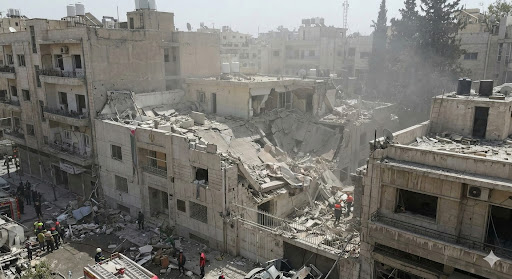
(Image 1 Caption: The aftermath of the April 1, 2024, strike on the Iranian consular building in Damascus. The destruction catalyzed direct confrontation.)
Tehran’s Response: Operation True Promise
On April 13, Iran launched hundreds of drones and missiles toward Israel in a highly choreographed and ultimately largely intercepted attack, dubbed Operation True Promise. While Israel (with critical help from allied air forces) downed 99% of the projectiles, the mere act of launching from Iranian soil was a dramatic escalation. It demonstrated Iran’s willingness to engage directly rather than hiding behind its proxy forces.
3. The Shadow War Moves Inland: The Isfahan Incident
The dynamic changed again in late April when explosions were reported near a major military airbase near Isfahan, Iran. Isfahan is a critical location, housing both air defense assets and facilities related to Iran’s nuclear program.
Iranian officials initially downplayed the attack, suggesting it was carried out by “infiltrators” using small drones, while US officials identified it as an Israeli retaliatory strike. The Isfahan incident is crucial because it demonstrated Israel’s ability to penetrate deep into sensitive Iranian territory and strike sophisticated targets.
Image 2: Analysis of the Isfahan Strike
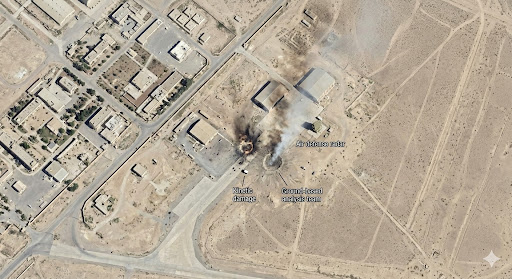
(Image 2 Caption: A high-altitude view analyzing the kinetic impact near a sensitive air defense facility in Isfahan. While localized, the precision of the strike sent a clear message.)
The strike in Isfahan appeared designed to be low-casualty but high-significance, targeting the radar systems that protect the very facilities involved in Iran’s nuclear program. It served as a demonstration of capability and a warning about the vulnerability of Iran’s most prized assets.
4. International Reaction and Diplomatic Efforts
The international community, led by the United States, European powers, and regional Arab states, is engaged in frenetic diplomacy to prevent the conflict from spiraling out of control.
Their strategy has been two-fold:
- Condemn and Sanction: Condemning Iran’s direct attack on Israel and implementing new sanctions targeting Iran’s drone and missile programs.
- Urge Restraint: Pressuring Israel to limit its retaliation and avoid actions that would compel a massive Iranian counter-response, thereby closing the ‘escalation ladder.’
The G7 and the UN Security Council have held multiple emergency sessions. Regional players, including Jordan and Saudi Arabia, find themselves in a complex position, having participated in intercepting Iranian projectiles (protecting their own airspace) while simultaneously criticizing the Israeli actions that provoked the initial Iranian response.
5. What Comes Next: The Strategic Outlook
The fundamental nature of the Iran-Israel conflict has changed. The “shadows” have lifted, and both nations have now established a precedent for direct strikes.
Several key factors will determine the short-term outlook:
- The Status of the Nuclear Program: Israel remains committed to preventing Iran from achieving a nuclear weapon. Strikes that threaten or target nuclear infrastructure will always trigger a major crisis.
- The Gaza Wildcard: The ongoing war in Gaza between Israel and Hamas remains the primary source of regional instability and a constant flashpoint for proxy involvement.
- US Leadership and Red Lines: The degree of influence the Biden administration can exert over both its ally, Israel, and its adversary, Iran, will be critical. Clear communication of “red lines” is essential to avoid miscalculation.
Mapping the Escalation Risk
We are now monitoring three possible scenarios:
Image 3: The Shifting Balance of Power (Map)
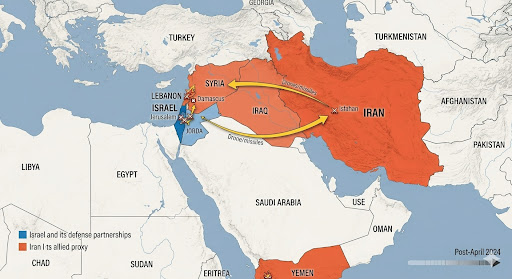
(Image 3 Caption: A geopolitical visualization mapping the confrontation. Arrows show direct strike routes, contrasting the dynamic with the proxy battles (orange dots in Syria, Yemen, Iraq) that defined the previous phase. The Isfahan and Damascus strikes (Image 1 and 2 icons) are key flashpoints in this new direct engagement model.)
The map (Image 3) visualizes how the recent events have redefined the regional security landscape, with the traditional proxy war zones (marked by clusters of orange) now overlayed by the threat of direct state-on-state kinetic exchange (the large yellow arrows).
The world watches closely, hoping that diplomatic pressure can establish a new, albeit tense, equilibrium before the next spark ignites a wider conflagration.